Be yourself; Everyone else is already taken.
— Oscar Wilde.
This is the first post on my new blog. I’m just getting this new blog going, so stay tuned for more. Subscribe below to get notified when I post new updates.
Be yourself; Everyone else is already taken.
— Oscar Wilde.
This is the first post on my new blog. I’m just getting this new blog going, so stay tuned for more. Subscribe below to get notified when I post new updates.
En este enlace puedes consultar más sobre las Estrategias para la evangelización a partir de la Historiografía Lingüistica: https://drive.google.com/file/d/0B4ASHvB5PFK4a3NwQUt4U1o2ZTRXUkl4a2xnRk42dGk0cDFJ/view?usp=sharing

This is an example post, originally published as part of Blogging University. Enroll in one of our ten programs, and start your blog right.
You’re going to publish a post today. Don’t worry about how your blog looks. Don’t worry if you haven’t given it a name yet, or you’re feeling overwhelmed. Just click the “New Post” button, and tell us why you’re here.
Why do this?
The post can be short or long, a personal intro to your life or a bloggy mission statement, a manifesto for the future or a simple outline of your the types of things you hope to publish.
To help you get started, here are a few questions:
You’re not locked into any of this; one of the wonderful things about blogs is how they constantly evolve as we learn, grow, and interact with one another — but it’s good to know where and why you started, and articulating your goals may just give you a few other post ideas.
Can’t think how to get started? Just write the first thing that pops into your head. Anne Lamott, author of a book on writing we love, says that you need to give yourself permission to write a “crappy first draft”. Anne makes a great point — just start writing, and worry about editing it later.
When you’re ready to publish, give your post three to five tags that describe your blog’s focus — writing, photography, fiction, parenting, food, cars, movies, sports, whatever. These tags will help others who care about your topics find you in the Reader. Make sure one of the tags is “zerotohero,” so other new bloggers can find you, too.
Compartimos con ustedes una presentación donde se abordan los aspectos más relevantes, desde la perspectiva lingüística, de la obra La rectificación de los nombres del filósofo chino Hsün Tzu, conocido principalmente por su tratado de estrategia militar intitulado El arte de la guerra.
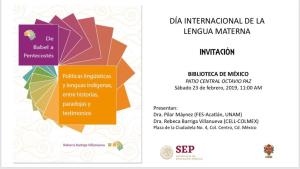
Este material, realizado por la doctora Raphaèle Dumont de la Université de Saint Etienne, tiene como objetivo presentar una de las creaciones más originales y efectivas del proceso de evangelización posterior a la conquista, producto del trabajo y la inventiva franciscana: el teatro evangelizador.
Esta presentación tiene como objetivo principal mostrar las aportaciones lingüísticas de Francisco Belmar (1859-1915) a través de sus trabajos. Para ello, la primera parte del video contextualiza su obra a partir de sus antecedentes lingüísticos, esto es, las disertaciones de autores decimonónicos mexicanos tales como Crisóstomo Nájera (1803-1853), Manuel Orozco y Berra (1816-1881) y Francisco Pimentel (1832-1893). Asimismo, se aborda una breve biografía del autor oaxaqueño y la revisión de su obra: sus temas y su metodología.
Video elaborado por Luis Daniel Peña

 Seminario Permanente de Historiografía Linguistica